


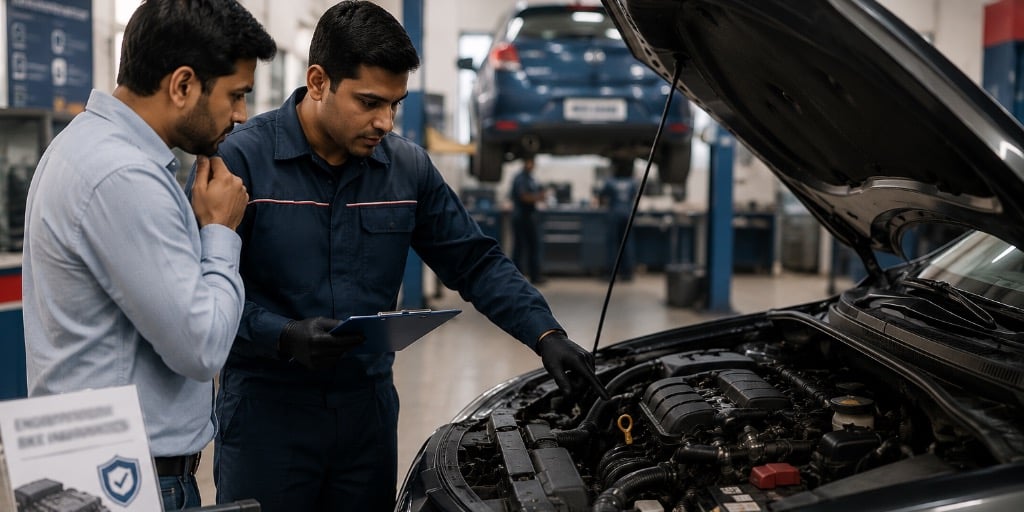
Picture this. It is monsoon season in Mumbai, the roads have turned into rivers, and your car stalls in knee-deep water. You turn the key to restart it, and that one move seizes the engine. The repair bill? It can run past a lakh rupees. Here is the painful part: your regular comprehensive policy will not pay a single rupee of it. That gap is exactly what engine protection car insurance is built to close. This is a simple guide to what it covers, what it costs, and whether you need it. Read on to know why your standard policy skips engine damage, what the add-on includes, how much it adds to your bill, and who needs it most, all in plain words.
What is Engine Protection Cover and Why a Standard Policy Does Not Pay for It
Let us clear up the biggest surprise first. A normal comprehensive car policy covers accidents, theft, fire, and flood damage to the body of your car. But it usually does not cover damage to the engine itself when water gets inside it. That is treated as consequential damage, not direct accident damage, so it falls outside the standard cover.
This is where the engine protect add on comes in. It is an extra cover you buy on top of your comprehensive policy, and it pays for engine repairs that the base policy leaves out. The engine is the most expensive part of your car, and fixing or replacing it can cost lakhs. So for a small extra premium, this engine protect add on shields you from the one repair bill that hurts the most. If you have ever wondered why a flooded car owner still ends up paying out of pocket, this missing cover is the reason, and an engine insurance add on in India is the simplest way to fix it.
What Engine Protection Add-on Covers
The add-on is narrow but powerful, focused on the engine and its internal parts. Here is what a typical engine protection car insurance add-on pays for.
Hydrostatic Lock
This is the big one. Hydrostatic lock happens when water enters the engine, usually after you try to restart a car stuck in a flood. The water blocks the pistons and seizes the engine. The hydrostatic lock cover car insurance offers through this add-on pays for the repair, which is otherwise excluded and can be very costly.
Oil Leakage
If lubricating oil or coolant leaks and damages the engine from the inside, this cover pays for the repair. These leaks often go unnoticed until real damage is done, so the cover saves you from a heavy surprise bill.
Gearbox Damage
The cover also extends to damage to the gearbox and connected internal parts like the crankshaft, pistons, and connecting rods. This is why it is sometimes called engine gearbox protection insurance, since it guards the whole drivetrain, not just the engine block. Whatever the label, this engine gearbox protection insurance is the part of your engine protection car insurance that handles the heaviest internal repairs.
Together, these three areas cover the costliest internal damage a car can suffer, the kind a basic policy walks away from.
What Engine Protection Does Not Cover
Even this add-on has limits, and knowing them saves disappointment at claim time. A typical engine protection cover will not pay in these cases.
- Normal wear and tear of the engine from age and regular use.
- Damage from negligent or reckless driving.
- Extra damage caused by delaying repairs after the first sign of trouble.
- Repairs done at a non-approved garage or by an unapproved mechanic.
- Damage from a known mechanical fault you ignored.
The cover pays for sudden engine damage from water or leakage, not the slow ageing of the engine or the result of carelessness. One important tip: if your car stalls in water, do not try to restart it. Restarting is what causes hydrostatic lock, and repeated attempts can even reduce your claim if the insurer sees it as avoidable damage.
Premium Cost: How Much It Adds to Your Car Insurance Bill
Here is the good news. This cover is cheap next to what it protects. The engine protection add-on usually costs around 500 to 2,500 rupees a year, depending on your car's value and engine. As a rough rule, it works out to a small share of your own-damage premium.
Now weigh that against the risk. A hydrostatic lock repair can cost anywhere from 20,000 rupees to well over 1.5 lakh rupees, depending on the car. In a real case from the Mumbai floods, one owner's SUV suffered hydrostatic lock with a repair bill of 1.3 lakh rupees, and the engine protection car insurance add-on paid it in full. So a single waterlogging car insurance claim can return many times the small premium you paid. For anyone in a flood-prone city, that is one of the best-value add-ons in all of car insurance.
Which Cars and Situations Need Engine Protection Most
This add-on is not for everyone, but for some drivers it is close to essential. You should seriously consider it if any of these fit you.
- You live in or commute through a flood-prone city like Mumbai, Chennai, Bengaluru, or low-lying parts of Delhi.
- You park or drive through areas that waterlog during heavy rain.
- Your car is new or expensive, so an engine repair would cost a lot.
- Your car has a modern engine with sensors and electronics that are costly to fix.
- You own a diesel car, as diesel engines can be pricier to repair after water damage.
If you live in a dry area, rarely see waterlogging, and drive an older, cheaper car, you may not need it. But for the millions of Indians who face flooded roads every monsoon, this engine insurance add on india widely recommended and earns its small premium many times over.
Engine Protection and Zero Dep: Should You Buy Both
These two add-ons often get confused, but they do different jobs, and many drivers benefit from holding both. Zero depreciation pays the full cost of replaced parts without cutting for wear and tear. Engine protection pays for engine damage that the base policy excludes entirely.
Think of it this way. Zero depreciation makes your normal accident claims pay out more fully. Engine protection opens up a whole category of claims, engine water damage, that you could not claim at all otherwise. They do not overlap; they complete each other. For a new car in a flood-prone city, buying both is a smart move: zero depreciation for everyday accident repairs, and engine protection for the monsoon risk. For an older car in a dry area, you may need neither. Match the add-ons to your car's age and your local weather.
How to Claim Under Engine Protection Cover
Filing an engine protection claim is straightforward if you act quickly and correctly. Here is how the engine insurance claim process in India usually flows for an engine protection car insurance add-on:
- If your car stalls in water, do not restart it. Switch off and call for a tow.
- Inform your insurer immediately and register the claim, noting the reference number.
- Get the car towed to a network garage, not driven, to avoid worsening the damage.
- Let the surveyor inspect the engine and approve the repair estimate.
- The garage repairs the engine, and for a cashless claim, the insurer settles the bill directly.
- You pay only your deductible and anything excluded.
Engine Protect Insurance Cover Add On: Taking The Right Call
Engine protection car insurance is one of those add-ons you hope you never use but are deeply glad to have when the rains come. For the price of a nice dinner, it shields you from the single most expensive repair your car can face. If you live anywhere that floods, pair it with zero depreciation, keep it active each monsoon, and remember the golden rule: if your car stalls in water, never restart it, just tow it. Do that, and a flooded road becomes an insurance claim, not a financial disaster.
Note: This article has been vetted by Siddarth Khandelwal, an Insurance expert at Insure24.
FAQs
Q. Is the engine protection add on car insurance worth it?
For drivers in flood-prone or waterlogging areas, the engine protection add on car insurance is worth it many times over. It costs around 500 to 2,500 rupees a year but guards against engine repair bills that can cross 1.5 lakh rupees. For dry areas and older cars, it may be less essential.
Q. Does a standard comprehensive policy cover engine water damage?
No. A standard comprehensive policy covers accident, theft, fire, and flood damage to the car body, but not engine damage from water entering the engine. That is consequential damage, which needs a separate engine protection add-on to be covered.
Q. What does engine protection car insurance cost?
The add-on usually costs around 500 to 2,500 rupees a year, depending on your car's value and engine. It works out to a small share of your own-damage premium, which is tiny next to the lakh-plus repair bills it can save you from.
Q. Does engine protection insurance for diesel cars make sense?
Yes. Engine protection insurance for diesel cars is often even more valuable, since diesel engines can be more expensive to repair after water damage. If you drive a diesel car in a flood-prone area, this add-on is one of the most useful you can buy.
Q. What is hydrostatic lock, and is it covered?
Hydrostatic lock happens when water enters the engine, usually when you restart a car stuck in a flood, seizing the engine. A standard policy excludes it, but a hydrostatic lock cover car insurance add-on, also called engine protection, pays for the repair, which can otherwise cost over a lakh.
Q. Can I claim if my engine was damaged by waterlogging?
Yes, if you have the engine protect add on. A waterlogging car insurance claim for engine damage is exactly what this cover is for. Just remember not to restart the car in water, tow it instead, and inform your insurer straight away to keep the waterlogging car insurance claim clean.
Q. Should I buy engine protection and zero depreciation together?
For a new car in a flood-prone city, yes. They cover different things: zero depreciation boosts your normal claim payouts, while engine protection covers water damage the base policy excludes. Together, they give strong all-round protection. For an older car in a dry area, you may need neither.
Q. How long does an engine insurance claim take?
Most engine protection claims are settled within about 7 to 10 days once the surveyor approves the estimate and the repair is done. Acting fast, towing rather than restarting, and using a network garage all help speed up the engine insurance claim process India relies on.
Q. Is engine protection a one-time or yearly add-on?
It is a yearly add-on, renewed along with your car policy each year. Since flood risk is seasonal and ongoing, it makes sense to keep it active year after year if you live in a flood-prone area, rather than dropping it after one dry season.
Q. Does engine protection cover a car that breaks down mechanically?
No. The cover is for sudden engine damage from water ingress, hydrostatic lock, or oil leakage, not for normal mechanical breakdown or wear and tear. A worn-out engine that fails from age is not covered, since that is treated as regular ageing, not accidental damage.












Licenced by

COMPANY
PRODUCTS
RESOURCES
LEGAL
Cars24 Financial Services Private Limited
(Wholly owned subsidiary of Cars24 Services Private Limited)
Corporate Office - 6th Floor, SAS Tower-C, Ch Baktawar Singh Road, Medicity Sector 38, Shivaji Nagar,
Gurgaon - 122001, Haryana
IRDAI Corporate Agency Registration No: CA0710 | Registration Validity: Perpetual |
CIN: U65990HR2018PTC075713
Disclaimer : The information contained in this website is presented purely for information purposes only provided as service to the internet community at large. It does not constitute insurance advice and we do not guarantee the accuracy, adequacy or the completeness of the information contained here.


Licenced by
COMPANY
PRODUCTS
RESOURCES
LEGAL
Cars24 Financial Services Private Limited
(Wholly owned subsidiary of Cars24 Services Private Limited)
Corporate Office - 6th Floor, SAS Tower-C, Ch Baktawar Singh Road, Medicity Sector 38, Shivaji Nagar,
Gurgaon - 122001, Haryana
IRDAI Corporate Agency Registration No: CA0710
Registration Validity: Perpetual
CIN: U65990HR2018PTC075713
Disclaimer : The information contained in this website is presented purely for information purposes only provided as service to the internet community at large. It does not constitute insurance advice and we do not guarantee the accuracy, adequacy or the completeness of the information contained here.