

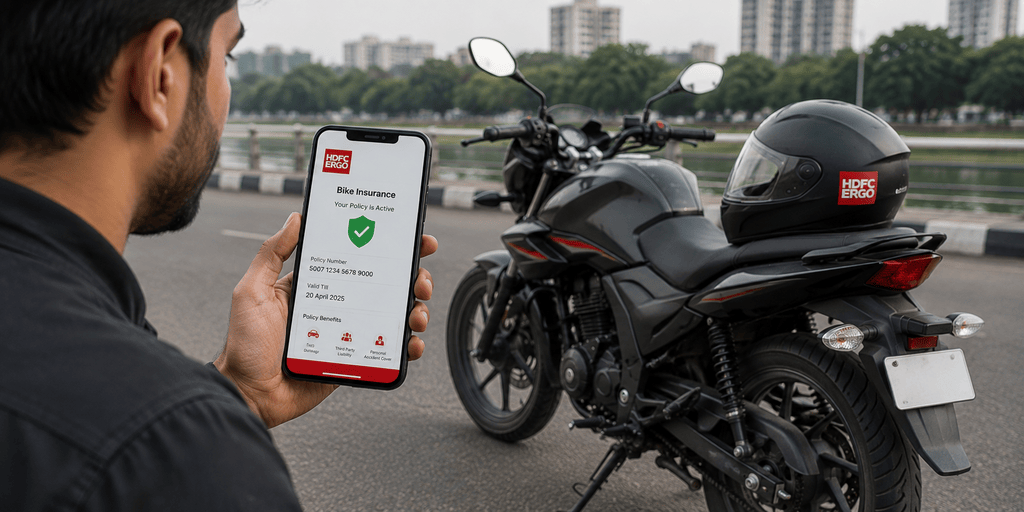
When you are choosing insurance for your two-wheeler, the brand name on the policy matters far less than three quiet questions. Will they pay the claim when you need it? Is there a cashless garage near you? And are you paying a fair premium for the cover you actually get? Everything else is noise.
HDFC ERGO is one of the larger private general insurers in India, and its two-wheeler insurance is a common option at purchase or renewal. This review looks at what it actually offers, the plans, premiums, add-ons and claim process, and where it is strong or worth a second thought, so you can judge it against those three questions rather than the advertising.
What Is HDFC ERGO Bike Insurance
HDFC ERGO Bike Insurance is the two-wheeler motor insurance sold by HDFC ERGO General Insurance, one of India's established private general insurers. It covers motorcycles, scooters, mopeds and electric two-wheelers, protecting both your own vehicle and your legal liability to others.
Like any Indian two-wheeler policy, it is built on two pillars. The own damage side pays for damage to your bike from accidents, fire, theft and calamities. The third-party side covers injury, death or property damage you cause to someone else, the legally mandatory minimum under the Motor Vehicles Act. Every policy also carries a compulsory personal accident cover for the owner-rider, which HDFC ERGO offers up to Rs 15 lakh.
A few numbers give a sense of scale. HDFC ERGO offers cashless claims at over 2,000 network garages across India, reports a high claim settlement ratio on its two-wheeler cover, and holds an iAAA rating from ICRA, the highest grade for claims-paying ability. Those are a reasonable starting point, best read alongside the plan you are actually buying.
Types of HDFC ERGO Bike Insurance Plans
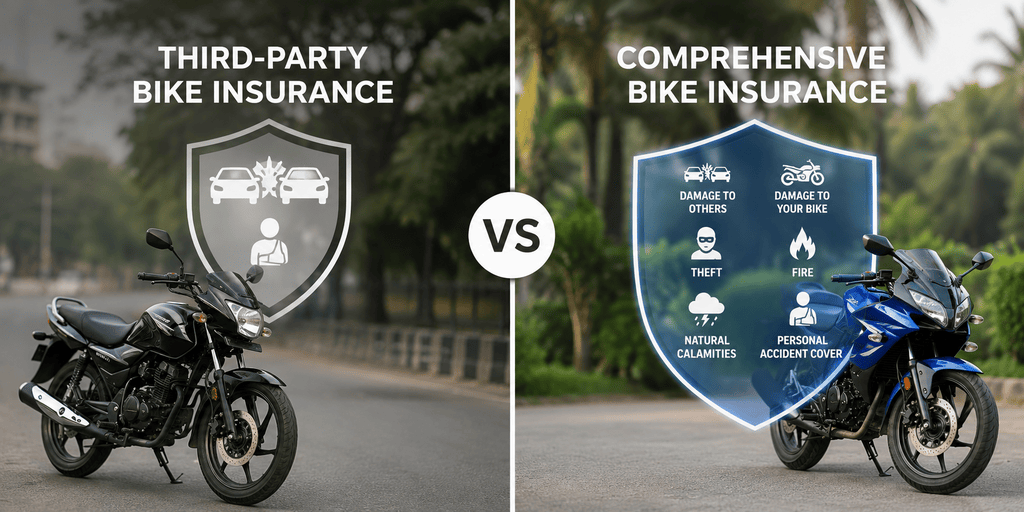
HDFC ERGO offers four types of two-wheeler cover. Choosing the right one is the single biggest decision you will make, more important than any add-on, because it sets the floor for what you are protected against.
Comprehensive Plan
The widest annual cover. It bundles own damage and third-party liability together, so it protects your bike against accident, theft, fire and natural events while also covering your liability to others. This is what most riders mean by full cover, and it is the plan you can build on with add-ons.
Third-Party Liability Plan
The legal minimum. It pays only for injury, death, or property damage you cause to a third party, and nothing towards your own bike. It is the cheapest option; its price is fixed by the IRDAI, and it suits older bikes whose value no longer justifies own damage cover.
Standalone Own Damage Plan
Cover for your own bike alone, with no third-party component. It exists because new two-wheelers are sold with a five-year third-party policy already attached, so a standalone own damage plan lets you insure the bike itself on a yearly basis without touching that long-term third-party cover underneath.
Long-Term and New Bike Cover
A comprehensive plan issued for two or three years at once, structured especially for new bikes. It locks in cover for a longer stretch, protects you from annual price revisions during the term, and spares you the yearly renewal task. For a brand-new two-wheeler, this is often the most convenient route.
| Plan | Covers your bike? | Covers third party? | Best for |
|---|---|---|---|
| Comprehensive (1 year) | Yes | Yes | Most riders wanting full annual protection |
| Third-Party only | No | Yes | Older bikes, or the bare legal minimum |
| Standalone Own Damage | Yes | No | New bikes with a long-term third-party policy already in force |
| Long-Term / New Bike (2 to 3 yrs) | Yes | Yes | New bikes wanting multi-year, hassle-free cover |
HDFC ERGO Bike Insurance Premium: What Affects Your Cost
HDFC ERGO advertises two-wheeler cover starting at Rs 538, which is simply the lowest third-party rate for the smallest engines. What you actually pay depends on a handful of factors, and knowing them shows where a quote can be trimmed.
The third-party portion is fixed by the IRDAI and is identical at every insurer, HDFC ERGO included. It depends only on your engine's cubic capacity:
| Engine capacity | Annual third-party premium |
|---|---|
| Not exceeding 75cc | Rs 538 |
| Exceeding 75cc but not exceeding 150cc | Rs 714 |
| Exceeding 150cc but not exceeding 350cc | Rs 1,366 |
| Exceeding 350cc | Rs 2,804 |
The own damage portion is where insurers differ and where your choices matter. The main factors are:
- IDV. The Insured Declared Value is your bike's current market value and the maximum payable for theft or a write-off. A higher IDV means a higher premium but a bigger payout.
- Engine capacity and model. A larger or more expensive bike costs more to insure on the own damage side.
- Age of the bike. IDV falls with depreciation each year, so an older bike carries a lower own damage premium.
- City. Metros with denser traffic and higher theft and repair costs are rated higher than smaller towns.
- No Claim Bonus. A discount for claim-free years, running from 20% after one year to 50% after five, applied to the own damage premium.
Add-ons and voluntary deductible. Each add-on raises the premium, while agreeing to a voluntary deductible lowers it.
On top of all this sits 18% GST. The practical takeaway: since the third-party rate is fixed, the real room to compare and save is entirely on the own damage premium and the add-ons, which is exactly where quotes from different insurers diverge.
Add-on Covers Offered by HDFC ERGO
Add-ons close the gaps a standard comprehensive policy leaves open. HDFC ERGO offers a broad set, and the skill is buying the ones that fit your bike rather than collecting them all.
| Add-on | What it does | Worth it when |
|---|---|---|
| Zero Depreciation | Pays the full cost of replaced parts with no deduction for wear and tear | The bike is under five years old, the eligibility limit for this cover |
| Emergency Roadside Assistance | Towing, jump-starts, flat-tyre help, fuel delivery and on-spot minor repairs | You ride highways or want breakdown support anywhere |
| No Claim Bonus Protection | Preserves your accumulated NCB even after a claim | Your NCB has climbed to 45% or 50% and is worth defending |
| Return to Invoice | Pays the original invoice value, not the depreciated IDV, on total loss or theft | The bike is newer, since that's when the gap between the original invoice price and the depreciated IDV is largest |
| Engine and Gearbox Protection | Covers engine and gearbox damage the base policy excludes | You ride in flood-prone or waterlogging-prone areas |
| Consumables Cover | Pays for items like engine oil, nuts and coolant normally excluded from claims | You want a claim to feel genuinely cashless |
| Daily Conveyance / Allowance | A daily allowance while the bike is out for repair, for a limited number of days | You depend on the bike for daily commuting |
The pairing that earns its place on a newer bike in a monsoon city is zero depreciation plus engine protection. On an older commuter with a low IDV, most of this list protects very little, so match the add-ons to the bike's age and how you ride.
HDFC ERGO Bike Insurance Claim Process
A policy is only as good as its claim, so this is the section that matters most. HDFC ERGO has made the process largely digital, with a self-inspection option that removes much of the old waiting.
- Intimate the claim: Register it through the HDFC ERGO website, mobile app, or the toll-free helpline, giving your policy number and the details of the incident. The sooner you do this, the faster it moves.
- Complete the inspection: You can opt for self-inspection through a link sent to your registered mobile, an app-enabled digital or AI video survey, or a physical surveyor visit, depending on the damage.
- Choose cashless or reimbursement: For a cashless claim, take the bike to one of the network garages, and HDFC ERGO settles the approved bill directly with the garage. For reimbursement, you pay the garage yourself and claim the amount back against the invoices.
Track and settle: Follow the status through the AI-enabled claim tracker. The self-inspection and AI-assisted damage assessment tools are built to speed up minor claims in particular, though actual turnaround still commonly runs a few working days rather than being instant, based on customer-reported experience. Reimbursement claims typically take longer, often a few weeks, since they involve manual document review after the fact.
This keeps the genuinely verified parts (self-inspection, AI tools, reimbursement being slower) and drops the unconfirmed one-day figure in favour of the ‘a few working days’ turnaround that's actually supported by customer reviews on HDFC ERGO's own website.
How to Renew HDFC ERGO Bike Insurance Online
Renewal is quick when done before the policy expires. The steps are straightforward:
- Start before expiry: Renewing while the policy is still active avoids any break in cover and any inspection.
- Enter your bike and policy details: review the IDV, and adjust it if it no longer reflects your bike's realistic value.
- Confirm your No Claim Bonus: make sure the correct discount is applied for your claim-free years.
- Review your add-ons: drop any you never use and keep those that still fit the bike's age and your city.
Pay online: complete payment and download the renewed policy.
Two rules are worth remembering. Your NCB stays valid for up to 90 days after expiry. Let the policy lapse beyond that and the bonus resets to zero, taking a discount of up to 50% with it. And once a policy has lapsed, restoring own damage cover usually requires an inspection, whereas renewing on time does not. Renewing early is simply cheaper and easier.
How to Buy and Compare HDFC ERGO Bike Insurance
HDFC ERGO is one strong option among many, and since the third-party rate is identical everywhere, the only meaningful differences between insurers sit in the own damage premium, the add-on pricing and the claim experience. The sensible way to buy is therefore to compare, not to pick a name and hope.
This is where a comparison platform earns its keep. On Insure24, you can compare HDFC ERGO's two-wheeler insurance plans against quotes from more than 20 insurers side by side, with the same IDV and the same add-ons, then buy or renew online in a few minutes. Comparing like with like is the whole point, because a cheaper quote built on a lower IDV is not actually cheaper, it is simply less cover.
Enter your registration number, set an honest IDV, and select only the add-ons that suit your bike. If HDFC ERGO is competitive for your bike and city, you will see it clearly, and if another insurer offers better value for the same protection, you will see that too. Either way, you decide from evidence rather than advertising.
HDFC ERGO Bike Insurance Review: Strengths and Things to Weigh
No insurer is right for everyone, so here is a balanced read rather than a verdict handed down.
Strengths:
- A wide cashless garage network of over 2,000 workshops, which matters most at the moment you need a repair.
- A genuinely digital claim process, with self-inspection and video survey that can settle small claims quickly.
- A broad add-on suite, including zero depreciation, engine protection, return to invoice and NCB protection, so you can tailor the cover.
- Long-term and new-bike plans that suit riders who want multi-year, low-effort protection.
A high reported claim settlement ratio and an iAAA claims-paying rating from ICRA.
Things to weigh:
- Claim settlement and network figures are self-reported and vary by period and methodology, so treat them as a guide, not a guarantee.
- On price alone, digital-first insurers sometimes undercut established players, which is exactly why comparing quotes matters.
Add-on pricing varies, so check what each one adds to your specific premium rather than assuming it is trivial.
The fair conclusion: HDFC ERGO is a solid, well-established choice with strong claim infrastructure and a full range of plans and add-ons. Whether it is right for your particular bike comes down to how its premium and add-on pricing stack up against other insurers for the same cover, which is exactly what a side-by-side comparison on Insure24 shows you in a few minutes.
FAQs
1. What types of bike insurance does HDFC ERGO offer?
Four: a comprehensive annual plan, a third-party liability plan, a standalone own damage plan, and a long-term comprehensive plan of two or three years suited to new bikes. Comprehensive and long-term plans can be enhanced with add-ons.
2. How is the HDFC ERGO bike insurance premium calculated?
The third-party portion is fixed by IRDAI according to engine capacity. The own damage portion depends on your IDV, the bike's age and model, your city, your No Claim Bonus and any add-ons, with 18% GST on top. Only the own damage side varies between insurers.
3. Does HDFC ERGO offer a zero depreciation cover for bikes?
Yes, as an add-on. It pays the full cost of replaced parts with no deduction for wear and tear. It is available only for bikes up to five years old, which is the standard eligibility limit for this cover.
4. How do I make a claim with HDFC ERGO bike insurance?
Intimate the claim through the website, app or toll-free helpline, complete a self-inspection or video survey, then choose cashless repair at a network garage, where HDFC ERGO settles directly, or reimbursement, where you pay and claim back against invoices.
5. How many cashless garages does HDFC ERGO have?
HDFC ERGO reports over 2,000 cashless network garages across India for two-wheeler claims. Networks change over time, so it is worth checking for one near you when you buy or renew.
6. How do I renew my HDFC ERGO bike insurance online?
Enter your bike and policy details, review the IDV, confirm your No Claim Bonus, adjust add-ons, and pay online. Renew before expiry to avoid an inspection and to keep your NCB, which lapses if the policy stays expired beyond 90 days.
7. Is HDFC ERGO bike insurance good for a new bike?
Its long-term comprehensive plan, issued for two or three years, is designed for new bikes. It locks in cover, avoids annual renewals, and can be paired with zero depreciation and return to invoice, which are most valuable in a bike's early years.
8. What is the claim settlement ratio of HDFC ERGO bike insurance?
HDFC ERGO reports a high claim settlement ratio on its two-wheeler cover and holds an iAAA rating from ICRA for claims-paying ability. Such figures vary by source, period and methodology, so use them as a guide alongside claim reviews and cashless network reach.
9. Can I use a premium calculator before buying HDFC ERGO bike insurance?
Yes. A bike insurance premium calculator estimates your cost from your bike's details, IDV, city and No Claim Bonus. Comparing that estimate against other insurers for the same cover is the quickest way to judge whether the premium is fair.
10. Does HDFC ERGO bike insurance include personal accident cover?
Yes. A compulsory personal accident cover for the owner-rider is part of the policy, which HDFC ERGO offers up to Rs 15 lakh. Cover for a pillion rider or paid driver can be added separately.
11. What add-ons should I choose with HDFC ERGO bike insurance?
Match them to your bike. Zero depreciation and return to invoice matter most on newer bikes, engine protection matters where roads flood, and NCB protection is worth it once your bonus is high. Skip add-ons that do not fit your bike's age or usage.
12. Is comprehensive cover better than third-party for my bike?
While the bike holds value, comprehensive cover protects your own machine against theft, fire and accident damage, which third-party does not. Once the IDV has fallen to a few thousand rupees, third-party alone, which is compulsory anyway, can be the more sensible choice.

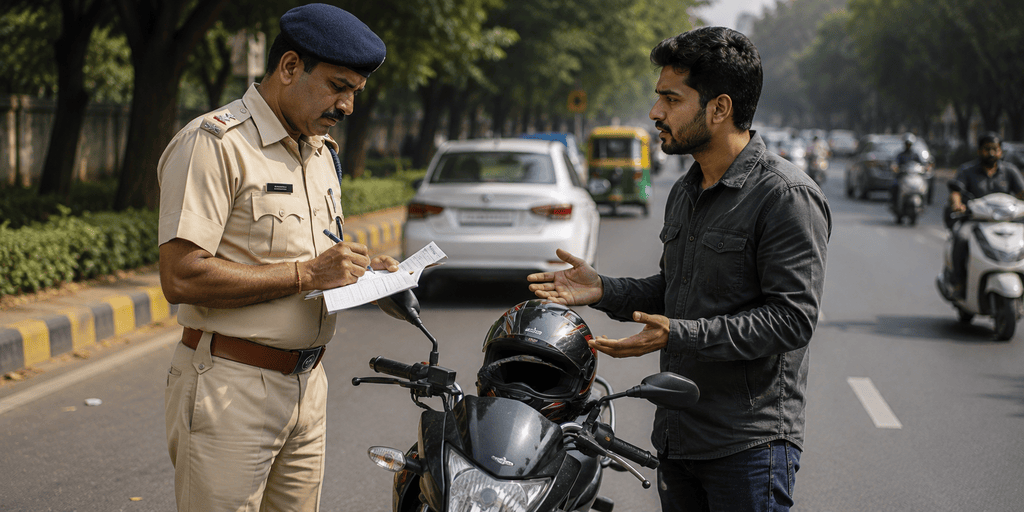
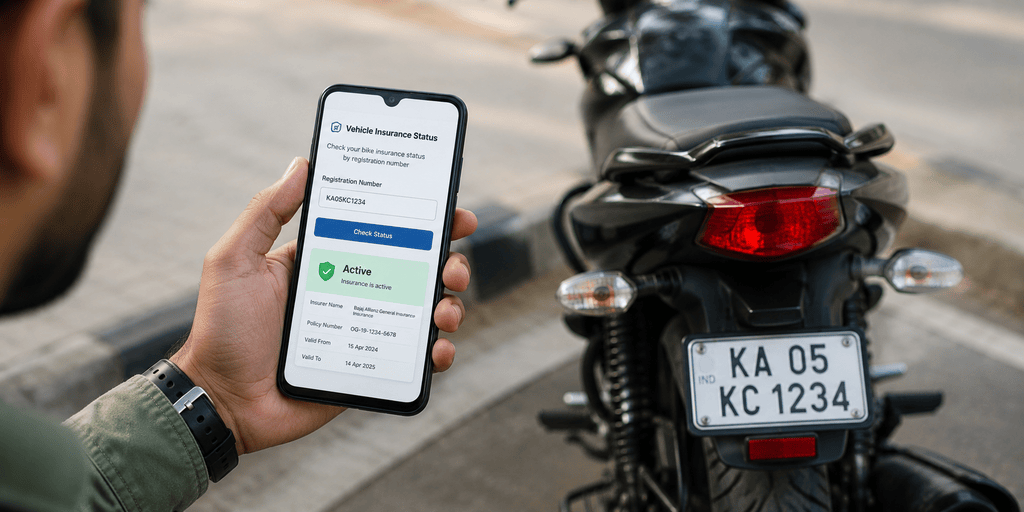
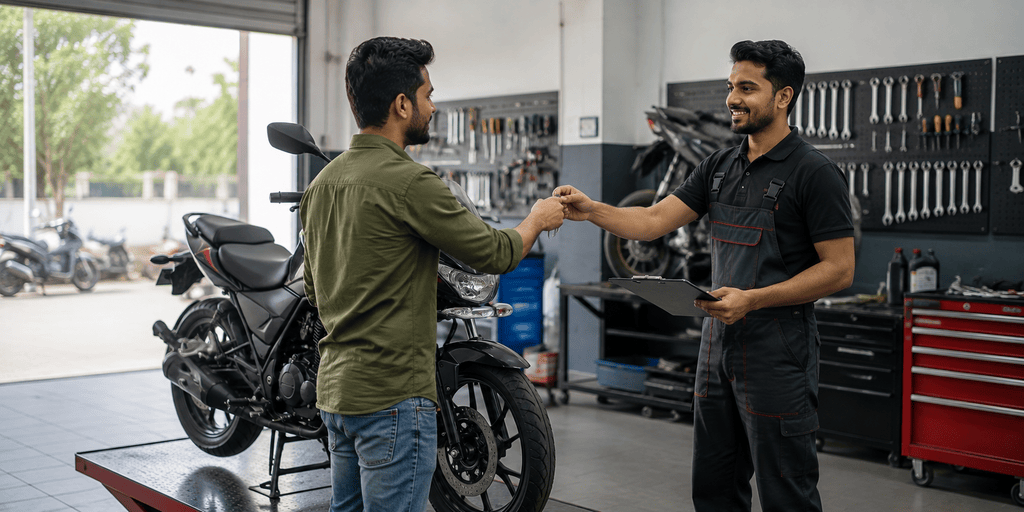
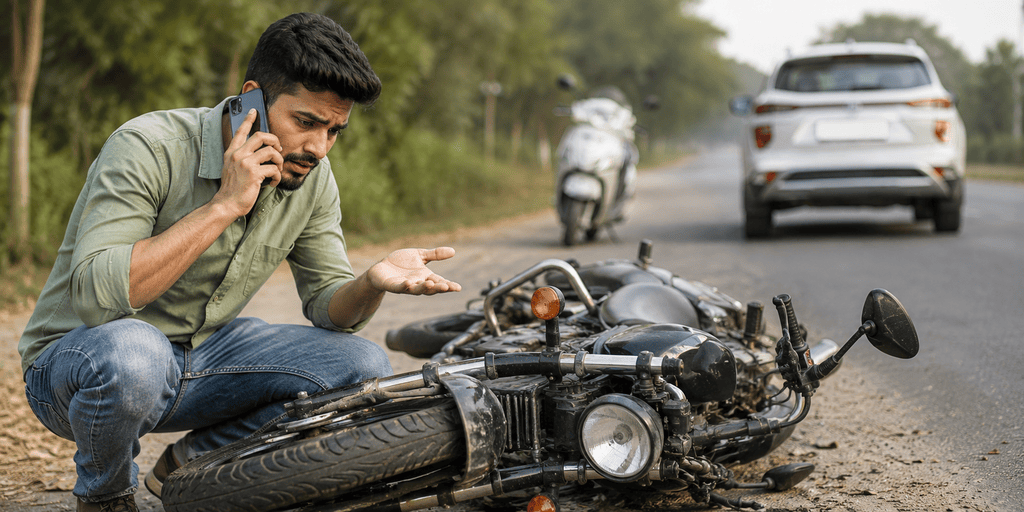
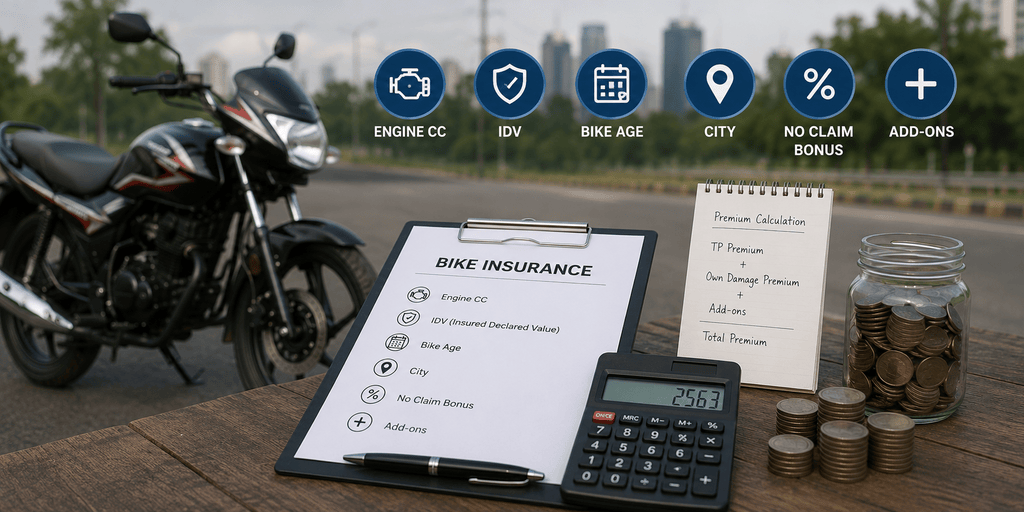
Two riders with what looks like the same bike can end up with noticeably different insurance quotes, and it is rarely a mistake on either side. Bike insurance premium calculation follows a defined set of rules, but those rules respond to more individual factors than most riders realise, from your city to your claim history to how you set your bike's declared value. This guide breaks down the factors affecting two wheeler insurance premium one by one, covering every major bike insurance cost factor, so a quote stops feeling arbitrary and starts feeling explainable.
Key Factors That Determine Bike Insurance Premium
Every comprehensive bike insurance premium is built from two separate pieces added together, and understanding this split is the foundation of any accurate bike insurance premium calculation. The first is third party premium, a flat rate fixed by IRDAI based purely on your bike's engine capacity, identical no matter which insurer you buy from. The second is own damage premium, which is where most of the variation between riders, and between insurers, actually shows up.
Own damage premium responds to your bike's Insured Declared Value, its age, your registration city, your claim history and accumulated No Claim Bonus, and any add-ons you choose to include. Two wheeler insurance premium in India can differ meaningfully between two riders with the same bike model simply because one lives in a higher theft city, has a longer claim-free streak, or has chosen a different set of add-ons.
How Engine CC Affects Your Premium
Engine capacity is the single factor that determines your fixed third party premium, and IRDAI groups two-wheelers into bands rather than pricing each cc individually. A 100cc commuter and a 145cc commuter typically land in the same third party band, while a 350cc or larger motorcycle moves into a meaningfully higher bracket. This portion of your premium cannot be reduced through negotiation or by switching insurers, since it is a fixed regulatory rate.
Engine capacity also has an indirect effect on own damage premium, since larger, more powerful bikes tend to have higher ex-showroom prices, which pushes up their Insured Declared Value and, with it, the own damage portion of your total premium. A bigger engine rarely changes your premium through cc alone beyond the fixed third party band, but it very often changes your premium through the higher IDV that tends to come attached to it.
How IDV Affects Your Premium
Insured Declared Value is the maximum amount your insurer pays if your bike is stolen or damaged beyond repair, and it directly drives your own damage premium. A higher IDV means a higher potential payout for the insurer, which translates into a higher premium. A lower IDV reduces your premium but also caps what you can actually claim.
This creates a genuine temptation to under-declare IDV to save a modest amount on premium, which is one of the more common and costly mistakes riders make. If your bike is later stolen or totalled, you are locked into whatever IDV you agreed to at the start of the policy period, so an artificially low figure directly reduces your payout exactly when you need it most. Setting IDV close to your bike's genuine current market value, rather than the lowest figure your insurer will accept, is almost always the better long-term choice.
How Bike Age and City Affect Premium
Your bike's age drives IDV down through a standard depreciation schedule, which in turn reduces own damage premium year after year, even before any No Claim Bonus is factored in. A five-year-old bike will generally carry a noticeably lower own damage premium than the same model when it was new, simply because its IDV has depreciated substantially over that period.
Registration city affects premium independently of age or engine size, since insurers price in local accident frequency and theft rates. Riders in dense metro areas with higher traffic volumes and higher reported theft generally see higher own damage premiums than riders with an identical bike registered in a smaller town with lighter traffic and a lower theft profile.
Third-Party Premium: IRDAI Fixed Rates by CC Slab
The table below reflects the general structure of IRDAI's notified third party rates for two-wheelers, current as of recent notifications. Since IRDAI reviews these periodically, confirm the exact current figures before relying on them for a purchase decision.
| Engine Capacity | Approximate Annual Third Party Premium |
|---|---|
| Up to 75cc | Rs 538 |
| 75cc to 150cc | Rs 714 |
| 150cc to 350cc | Rs 1,366 |
| Above 350cc | Rs 2,804 |
Since this portion of your premium is identical across every insurer, it is not worth spending time comparing on this component specifically. Where genuine comparison shopping pays off is entirely on the own damage side.
How Own Damage Premium Is Calculated
Own damage premium is generally calculated as a percentage of your bike's IDV, adjusted by insurer-specific rate factors tied to your bike model, city, and risk profile, then reduced by any No Claim Bonus you have accumulated. Different insurers apply somewhat different base rates to the same IDV, which is exactly why two comprehensive quotes for the same bike can differ even when the IDV figure itself is identical across both.
Add-ons are calculated separately and added on top of this base own damage premium, each priced according to the specific risk it covers. Zero depreciation cover, for instance, is priced higher than a smaller add-on like roadside assistance, since it increases the insurer's potential payout on every claim rather than covering a narrower, less frequent risk.
Sample Premium Table by Engine CC
To make this concrete, here is an illustrative first-year premium range across different engine capacity bands, using typical IDV assumptions for popular models in each band. These are indicative figures meant to show the general pattern, not exact live quotes, since actual premium depends on your specific bike, city, and add-ons.
| Engine Band | Example Bike Type | Indicative Total Comprehensive Premium (Year 1) |
|---|---|---|
| Up to 75cc | Basic scooter or moped | Rs 2,200 to 2,800 |
| 75cc to 125cc | Standard commuter bike or scooter | Rs 2,700 to 3,400 |
| 125cc to 150cc | Sporty commuter or entry naked bike | Rs 3,200 to 4,200 |
| 150cc to 350cc | Mid-size cruiser or tourer | Rs 5,500 to 7,500 |
| Above 350cc | Premium or high-capacity motorcycle | Rs 9,000 and above |
Notice how the jump between bands is driven far more by IDV than by the modest step-up in fixed third party premium, reinforcing that own damage cost is where the real variation in your total bill comes from.
Role of NCB in Reducing Premium
No Claim Bonus is one of the most significant levers you have over your own premium, applying only to the own damage portion and rising with each consecutive claim-free year. The standard progression runs from 20 per cent after one claim-free year to a maximum of 50 per cent after five consecutive years without a claim.
This is why riders wondering why is my bike insurance premium so high across renewal years sometimes overlook the simplest explanation: a single claim, even a small one, resets this discount entirely back to zero at the next renewal. Weighing whether a minor repair costs less than the NCB you would lose by claiming for it is worth doing every time, rather than filing every small claim reflexively.
How Add-ons Affect Total Premium
Add-ons increase your premium incrementally, and understanding roughly how much each one adds helps you choose deliberately rather than accepting a bundled package by default. Zero depreciation cover tends to be the costliest individual add-on, since it removes depreciation deductions on every claim. Engine protection, useful for riders in flood-prone cities, typically adds a moderate amount. Roadside assistance and NCB protection are usually the least expensive additions available.
Rather than accepting a pre-selected bundle, most insurers let you toggle add-ons individually, which is worth doing so you can see exactly how much each one costs relative to the protection it offers for how you actually ride.
Why Insurers Treat Cities Differently
City-based pricing often surprises riders more than any other factor on this list, since it feels less within your control than choices like IDV or add-ons. Insurers build their own damage rate factors partly from claims data specific to each city, tracking how often bikes registered there are stolen, how frequently accidents get reported, and how expensive repairs tend to run locally due to labour and parts costs.
This is why identical bikes with identical IDV can carry a genuinely different own damage premium purely based on the RTO code on the registration. If you are relocating and re-registering your bike, or simply curious why your renewal quote looks different from a friend's in another city, this city-level risk pricing is very often the answer, separate from anything about your personal riding history.
Ways to Reduce Your Bike Insurance Premium
A handful of practical choices can meaningfully lower your total premium without cutting essential coverage. Protecting your No Claim Bonus by avoiding claims for very minor damage is the single most effective lever available to most riders over time. Choosing a voluntary deductible, an amount you agree to pay out of pocket before your insurer contributes to a claim, reduces own damage premium in exchange for accepting more risk yourself.
Comparing quotes across two or three insurers before renewing matters more than people expect, since own damage rate factors genuinely differ between companies even for an identical bike and IDV. Fitting an approved anti-theft device can also unlock a modest discount from several insurers, and setting an accurate rather than inflated IDV keeps your premium proportionate to your bike's real value instead of paying for coverage you do not actually need.
FAQs
Q. How is bike insurance premium calculated in India exactly?
It combines a fixed third party rate set by IRDAI based on engine capacity with a variable own damage premium based on your bike's IDV, age, city, claim history, and chosen add-ons.
Q. Why is my bike insurance premium so high compared to last year?
Common reasons include a claim that reset your No Claim Bonus, a change in your bike's IDV, an insurer-wide rate revision, or newly added covers that were not part of your previous policy.
Q. What does bike insurance premium by engine cc 2026 look like for a 150cc bike?
Third party premium for a 150cc bike falls in the mid engine band, while total comprehensive premium including own damage typically runs into the low thousands of rupees annually, depending on IDV and add-ons.
Q. Does a higher IDV always mean better value?
Not necessarily. A higher IDV increases your maximum payout but also raises your premium, so the ideal figure closely reflects your bike's actual current market value rather than being pushed artificially high.
Q. Can I reduce my bike insurance premium without dropping coverage?
Yes, primarily by protecting your NCB, comparing quotes across insurers, considering a voluntary deductible, and fitting an approved anti-theft device where a discount is available.
Q. Do all insurers charge the same third party premium for the same bike?
Yes. The third party premium is fixed by IRDAI based on engine capacity and is identical across every insurer, so comparison shopping only affects the own damage portion of your premium.
Q. How much does No Claim Bonus actually save on renewal?
It can reduce your own damage premium by up to 50 per cent after five consecutive claim-free years, making it one of the largest single savings levers available to any rider.
Q. Does my bike's age reduce my premium automatically?
Yes, since IDV depreciates on a standard schedule as your bike ages, which reduces own damage premium correspondingly, separate from any NCB discount you may have also earned.
Q. Why do two riders with the same bike model pay different premiums?
Differences usually come from IDV, registration city, claim history, NCB status, and the specific add-ons each rider has chosen, rather than the bike model itself.
Q. Is it worth adding zero depreciation cover to a bike insurance premium calculation?
For newer or higher-value bikes, it is generally worth the added cost, since it meaningfully improves your payout on replaced parts during a claim, which matters most while your bike is newest and most expensive to repair.

Licenced by

COMPANY
PRODUCTS
RESOURCES
LEGAL
Cars24 Financial Services Private Limited
(Wholly owned subsidiary of Cars24 Services Private Limited)
Corporate Office - 6th Floor, SAS Tower-C, Ch Baktawar Singh Road, Medicity Sector 38, Shivaji Nagar,
Gurgaon - 122001, Haryana
IRDAI Corporate Agency Registration No: CA0710 | Registration Validity: Perpetual |
CIN: U65990HR2018PTC075713
Disclaimer : The information contained in this website is presented purely for information purposes only provided as service to the internet community at large. It does not constitute insurance advice and we do not guarantee the accuracy, adequacy or the completeness of the information contained here.


Licenced by
COMPANY
PRODUCTS
RESOURCES
LEGAL
Cars24 Financial Services Private Limited
(Wholly owned subsidiary of Cars24 Services Private Limited)
Corporate Office - 6th Floor, SAS Tower-C, Ch Baktawar Singh Road, Medicity Sector 38, Shivaji Nagar,
Gurgaon - 122001, Haryana
IRDAI Corporate Agency Registration No: CA0710
Registration Validity: Perpetual
CIN: U65990HR2018PTC075713
Disclaimer : The information contained in this website is presented purely for information purposes only provided as service to the internet community at large. It does not constitute insurance advice and we do not guarantee the accuracy, adequacy or the completeness of the information contained here.